An X-ray can help healthcare providers evaluate certain problems affecting the bones, chest, joints, and other areas of the body. If you are searching for an x ray in Los Angeles, understanding why your provider may recommend this type of imaging can help you know what to expect. X-rays are commonly used to investigate injuries, persistent symptoms, and certain health concerns when a physical examination alone does not provide enough information.
Whether an X-ray is appropriate depends on your symptoms, medical history, physical examination, and the area being evaluated.
When Might an X-Ray Be Recommended?
X-rays are particularly useful for examining bones and identifying certain changes inside the body. A provider may recommend one after an injury when there is concern about a fracture or another bone problem.
An X-ray may be considered after a fall, sports injury, car accident, or other event causing significant pain, swelling, tenderness, or difficulty moving the affected area. It can help identify fractures and guide further care.
X-rays can also be used when symptoms develop without a specific injury. Depending on the circumstances, a provider may use imaging to investigate ongoing pain, changes in joint function, or other symptoms that warrant a closer evaluation.
Common Areas Examined With X-Rays
The area examined depends on your symptoms and the reason for the imaging. X-rays can be used to evaluate many parts of the body, including the chest, spine, arms, legs, hands, feet, and certain joints.
A chest X-ray, for instance, can produce images of structures within the chest and may be used when a provider needs to investigate certain respiratory or chest-related concerns. Bone X-rays can help evaluate fractures, alignment, and some changes involving the skeletal system.
Your provider will determine which area requires imaging, and more than one area may be examined if necessary.
What Can an X-Ray Show?
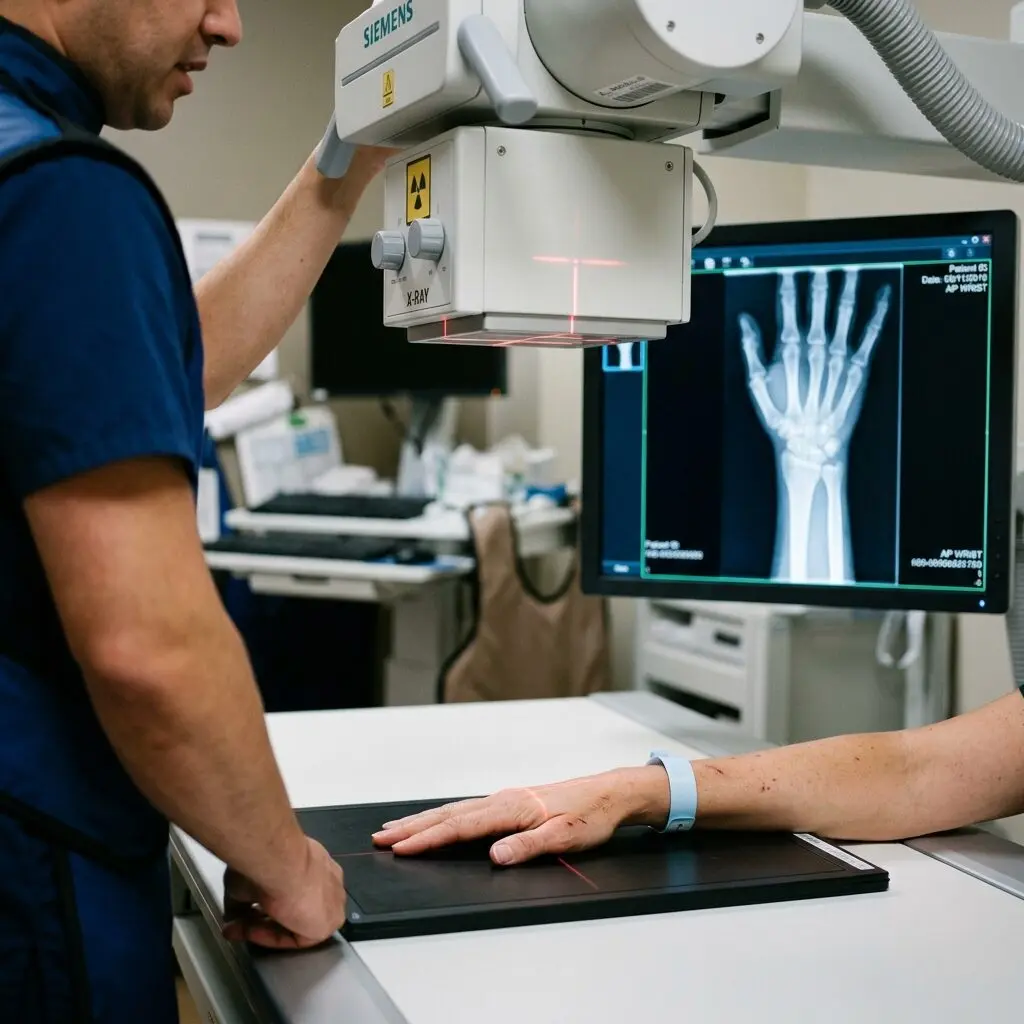
An X-ray creates images by using a small amount of ionizing radiation to produce pictures of structures inside the body. Different tissues absorb radiation differently, which allows certain structures to appear distinctly on the resulting image. MedlinePlus’s overview of X-rays explains that dense structures such as bone block much of the X-ray beam and appear white, while air appears black. Muscle, fat, and fluid appear in different shades of gray. This contrast allows healthcare providers to distinguish between different structures when reviewing an X-ray image.
X-rays are commonly used to examine bones and can provide images of areas such as the chest, abdomen, joints, spine, skull, and extremities. Several views may be taken depending on the area being examined. Because movement can make an image blurry, patients may need to remain still or briefly hold their breath while the image is captured.
If an X-ray does not provide enough information to evaluate a particular health concern, your healthcare provider may recommend additional evaluation or another type of imaging based on your symptoms and individual circumstances.
X-Rays and Injuries
Injuries are one of the common reasons a provider may recommend an X-ray. Pain and swelling do not always indicate a fracture, but certain symptoms can make imaging appropriate.
After an injury, your provider may consider factors such as where you have pain, whether the area is swollen or tender, how well you can move it, and how the injury occurred. An X-ray can help determine whether there is a visible fracture or another abnormality that needs attention.
If a fracture is identified, the results can guide treatment. If symptoms continue despite normal X-ray findings, additional evaluation may be recommended.
What Happens During the Imaging Process?
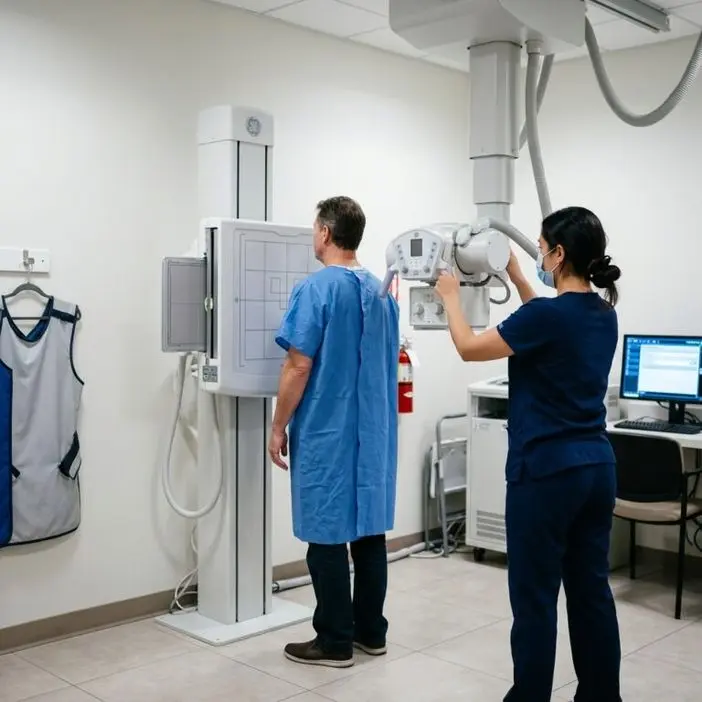
An X-ray examination is generally brief. You may be asked to position the part of your body being examined in a particular way so that the images can be taken clearly.
You may need to remain still while each image is captured. Depending on the area being examined, you may be asked to change position or hold your breath briefly.
More than one image may be taken to provide different views. Although the imaging itself is usually quick, total appointment time can vary.
What Should You Tell Your Provider Before an X-Ray?
Before imaging, tell your healthcare provider about relevant medical circumstances. If there is any possibility that you are pregnant, make sure your provider or imaging professional knows before the X-ray.
Mention previous imaging and relevant medical conditions so your provider can determine whether an X-ray is appropriate. Your provider may also consider whether another form of evaluation would be more suitable.
If you have questions about radiation exposure, ask your healthcare provider or imaging professional to explain the risks and benefits of the examination for your particular situation.
What Happens After the X-Ray?
After the images are taken, they are reviewed as part of the diagnostic process. Depending on the setting, a radiologist or other qualified healthcare professional may interpret the images and provide a report to the ordering provider.
Your provider reviews the imaging results alongside your symptoms, examination, medical history, and other test results before determining the next steps.
If the images show something requiring further attention, your provider may recommend treatment, monitoring, additional imaging, laboratory testing, or referral to another healthcare professional.
When Should You Discuss Imaging With a Provider?
Not every injury or symptom requires an X-ray. Seeking medical guidance can help determine whether imaging is appropriate instead of relying on symptoms alone.
If you have persistent pain, difficulty using an injured body part, significant swelling, or symptoms following an accident or other injury, discuss them with a healthcare professional. They can perform an examination and determine whether an X-ray or another type of evaluation may be useful.
Medical Disclaimer
This article is intended for general educational purposes and does not replace individualized medical advice, diagnosis, or treatment. The need for X-ray imaging varies by person and depends on individual symptoms, medical history, and clinical findings.
Where can I discuss whether an X-ray is appropriate?
If you have an injury, persistent symptoms, or another concern that may require diagnostic imaging, speak with Brentview Medical about X-ray services in Los Angeles and discuss whether an X-ray is appropriate for your situation.
Frequently Asked Questions
Why would a doctor order an X-ray?
A healthcare provider may recommend an X-ray to evaluate suspected fractures, certain bone or joint problems, chest concerns, or other symptoms that require imaging. The decision depends on your individual circumstances.
Can an X-ray detect a fracture?
X-rays are commonly used to identify many types of fractures. However, some injuries may require additional evaluation if a fracture is not visible on the initial images or symptoms continue.
Are X-rays used only for broken bones?
No. X-rays can also be used to examine areas such as the chest and certain joints. The type of X-ray ordered depends on the symptoms and what your provider needs to evaluate.
How long does an X-ray take?
The imaging itself is generally brief, although appointment times can vary depending on the area being examined and how many images are needed.