
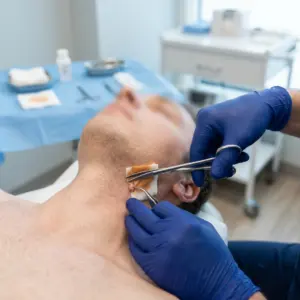
Skin Tag Removal in Los Angeles: Why Professional Treatment Beats DIY Every Time
That small piece of skin hanging from your neck, armpit, or eyelid may seem harmless until it catches on jewelry, rubs against clothing, or becomes a cosmetic concern. When that happens, many people search for DIY removal methods before considering professional care. However, skin tag removal in Los Angeles provides a safer alternative to attempting removal yourself.
Skin tags are common, benign skin growths. Half of all adults will have at least one during their lifetime. Although they generally do not affect your health, professional evaluation can help confirm that a growth is actually a skin tag before removal.
What Exactly Is a Skin Tag?
A skin tag, medically known as an acrochordon, is a small, soft, noncancerous growth that extends outward from the skin. Most are flesh-colored, although some can be darker and resemble a raised mole. They commonly develop where skin rubs against itself, including the neck, armpits, eyelids, groin, thighs, and under the breasts.
The Cleveland Clinic notes that the likelihood of developing skin tags increases with age and may also be higher with a family history. They can also be associated with obesity, diabetes, and hormonal changes during pregnancy. Most skin tags do not require treatment, and some may fall off on their own. Removal may be considered when a tag becomes irritated, bleeds easily, rubs against clothing or jewelry, or bothers you because of its appearance.
Why DIY Removal Is a Bad Idea
Online searches offer numerous ways to remove skin tags at home, including tying them off with dental floss, cutting them with household scissors, or applying products intended for other skin growths. These methods can cause bleeding, infection, scarring, damage to nearby healthy skin, or incomplete removal. There is also a more serious concern: a growth that looks like a skin tag may not actually be one. The Cleveland Clinic notes that moles, warts, certain skin diseases, and skin cancer can sometimes resemble skin tags.
Having a healthcare professional evaluate the growth before removal can help prevent misdiagnosis. Professional treatment also allows the area to be properly prepared and an appropriate removal method to be selected.
Professional Skin Tag Removal: What to Expect
Professional removal is generally performed as an office procedure. The provider evaluates the growth first and determines whether removal is appropriate. Depending on its size and location, an anesthetic may be used to numb the area.
Brentview Medical states that its physicians use several methods for skin tag removal, including excision, freezing with liquid nitrogen, and cautery using an electrical device. The treatment area is thoroughly washed with alcohol before removal. When anesthesia is necessary, it is administered before the procedure, and Brentview Medical states that there should be no discomfort once the anesthetic takes effect. Tiny tags can sometimes be removed without anesthesia. The appropriate technique depends on the individual growth and where it is located.
When Should You Consider Skin Tag Removal?
Because skin tags are generally harmless, treatment is not required simply because one exists. Many people choose removal because of irritation or appearance. A neck tag, for example, may repeatedly rub against a necklace or shirt collar. A tag in the armpit can experience friction during movement, while one on the eyelid may be particularly bothersome because of its location. The Cleveland Clinic recommends discussing removal with a healthcare provider when a skin tag becomes irritated, bleeds easily, or bothers you cosmetically. Any growth that looks unusual or does not clearly resemble a typical skin tag should be evaluated before removal.
Recovery and Aftercare
After removal, the treated area may develop a scab during healing. The Cleveland Clinic notes that slight imperfections can remain after the scab falls away, although they are generally not very noticeable. Aftercare depends on the removal method and treatment location. Follow your healthcare professional’s instructions and avoid picking at the area while it heals. Contact your provider if you develop unusual or worsening symptoms.
Can a Skin Tag Grow Back?
When a healthcare professional completely removes a skin tag, the same growth is unlikely to return. However, removing one does not prevent new skin tags from developing elsewhere. Factors associated with skin tags include age, family history, friction, obesity, and hormonal changes. Some people may therefore be more likely to develop additional growth over time.
Why Choose Brentview Medical for Skin Tag Removal?
Professional treatment offers more than removal alone. Having the growth evaluated first helps determine whether it is appropriate for removal and allows a medical professional to select an appropriate technique. Brentview Medical’s skin tag removal service includes excision, liquid nitrogen freezing, and electrical cautery. Its page also explains that the treatment area is cleaned before removal and that anesthesia may be used depending on the size and location of the skin tag.
Skin tags are common and usually harmless, but attempting to remove one at home can create avoidable risks. Professional treatment provides a medically supervised alternative for people who want a bothersome growth removed. If a skin tag repeatedly becomes irritated, bleeds, catches on clothing or jewelry, or concerns you cosmetically, consider professional evaluation instead of attempting DIY removal.
Choose professional skin tag removal at Brentview Medical.
A professional approach can help you avoid the risks associated with attempting skin tag removal at home.
Frequently Asked Questions
Does skin tag removal hurt?
Brentview Medical states that an anesthetic may be administered depending on the size and location of the skin tag. Once the anesthetic takes effect, there should be no discomfort during the process. Tiny tags may sometimes be removed without anesthesia.
What methods are used to remove skin tags?
Brentview Medical lists excision, freezing with liquid nitrogen, and cautery using an electrical device. The appropriate method depends on the individual growth.
Can I remove a skin tag at home?
DIY removal is not recommended. According to the Cleveland Clinic, at-home treatments can cause scarring, excessive bleeding, infection, incomplete removal, and damage to nearby healthy skin. A growth that looks like a skin tag may also be something else.
Do skin tags need to be removed?
Usually, no. Most skin tags do not require treatment. Removal may be considered if a tag becomes irritated, bleeds easily, or bothers you because of its appearance.
Can a skin tag grow back after removal?
If a healthcare provider completely removes a skin tag, the same growth is unlikely to return. However, new skin tags can develop elsewhere.