
Physical Exam in Hollywood CA: Turning a Routine Visit Into a Health Checkpoint
A healthcare visit can be useful even when you do not have a specific complaint. A physical examination provides an opportunity to review your current health, discuss changes, and determine whether anything needs closer attention. If you are considering a physical exam in Hollywood CA, understanding how an examination fits into ongoing healthcare can help you approach the appointment with greater confidence.
Think of a Physical Exam as a Health Checkpoint
Health can change gradually. Blood pressure, weight, medications, activity levels, and other aspects of wellbeing may look different from one appointment to another. A physical exam gives a healthcare provider an opportunity to consider these details together.
The purpose is not simply to look for illness. Your provider can use your health history, current concerns, measurements, and examination findings to build a clearer picture of your health and decide whether anything warrants additional attention.
Sometimes the result may simply be reassurance. In other cases, the information gathered may lead to monitoring, testing, or another appointment.
Your Health History Adds Important Context
A physical finding is rarely interpreted completely on its own. Your provider may want to know about previous illnesses, surgeries, medications, allergies, family history, lifestyle, and recent changes in how you feel.
For example, a change in weight may have different significance depending on appetite, activity, medications, and other symptoms. Similarly, an unusual measurement may need to be considered alongside previous readings and your broader health history.
Being open about changes you have noticed gives your provider more information to work with during the appointment.
What Can Be Included?
There is no single examination that is appropriate for every person. The assessment can vary according to your age, medical history, symptoms, medications, and reason for the visit.
Your provider may review basic measurements such as blood pressure, pulse, temperature, height, and weight. Depending on your circumstances, they may also examine areas such as the heart, lungs, abdomen, ears, eyes, throat, skin, or other relevant parts of the body.
The examination is therefore not necessarily a fixed checklist. Information gathered during the conversation can help determine which areas deserve attention.
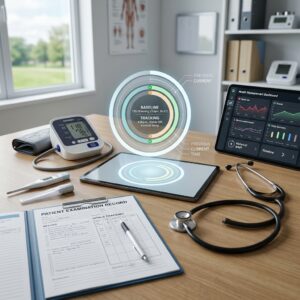
A Physical Exam Can Create a Useful Baseline
One appointment provides information about your health at a particular point in time. Keeping that information over multiple visits can make changes easier to recognize.
A baseline may help your provider compare future measurements or discuss whether a symptom or finding has remained stable. It can also provide useful context if your health circumstances change later.
This is one reason routine healthcare can be valuable even when you currently feel well. The goal is not to predict everything that could happen in the future, but to maintain a clearer record of your health over time.
What Happens If Something Needs Further Evaluation?
A physical exam does not always answer every health question. If your provider notices something that needs clarification, they may recommend additional evaluation.
Depending on the situation, this could involve repeating a measurement, monitoring the issue, ordering laboratory testing or imaging, or referring you for further assessment. The appropriate next step depends on the finding and your individual circumstances.
An additional test does not automatically mean that a serious problem has been identified. Sometimes more information is simply needed before a provider can determine what a finding means.
If follow-up is recommended, ask what the test or appointment is intended to evaluate and what you should expect.
Preventive Care Can Be Part of the Conversation
A physical exam can also provide an opportunity to discuss your broader healthcare needs. Depending on your circumstances, your provider may review whether particular preventive services or health assessments are appropriate.
Recommendations can vary according to individual factors rather than following exactly the same approach for everyone.
Mayo Clinic describes its Executive Health Assessment as a comprehensive approach designed to provide a clearer picture of current health, identify areas that may need attention, establish a health baseline, and develop personalized recommendations based on a person’s health history, lifestyle, and priorities.
While an executive assessment is different from a standard physical exam, the principle of using health information to understand current wellbeing and track changes over time illustrates why a broader view of health can be useful.
Bring Your Questions to the Appointment
You do not need to arrive with a long list of medical information. A few simple preparations can make the discussion more productive.
Have an updated list of medications, vitamins, and supplements available. Make a note of symptoms or health changes you want to mention. You may also want to write down questions about a family health concern, a medication, a recent change, or whether additional evaluation is appropriate.
If another healthcare provider has relevant medical records or previous test results, ask whether they should be shared with your current provider.
Most importantly, mention changes even when you are uncertain whether they are significant. Your provider can determine whether they require further attention.
How Often Do You Need an Exam?
There is no universal schedule that applies equally to every person. Your healthcare needs can depend on factors such as age, medical history, medications, existing conditions, and individual risk.
Rather than assuming that everyone needs examinations at exactly the same interval, discuss an appropriate schedule with your healthcare provider. The frequency of visits can change as your circumstances change.
Medical Disclaimer
This article is for general informational purposes only and does not constitute medical advice, diagnosis, or treatment. Speak with a qualified healthcare professional about your individual healthcare needs.
Keep Your Health on the Agenda
A physical exam can be a useful checkpoint for reviewing your health, documenting relevant findings, and deciding whether anything requires additional attention. It can also create information that helps you and your provider recognize changes over time.
If you are looking for a physical exam in Hollywood, CA, Brentview Medical’s physical exam services can provide a starting point for discussing your healthcare needs and scheduling an appointment.
Frequently Asked Questions
Can a physical exam be useful if I feel healthy?
Yes. An examination can provide an opportunity to review your current health, establish relevant baseline information, and discuss preventive or follow-up care with a healthcare professional.
What happens if my provider finds something unusual?
Your provider may recommend monitoring, repeat measurements, additional testing, or another evaluation depending on the finding. An unusual result does not automatically indicate a serious condition.
Should I tell my provider about minor health changes?
Yes. Mentioning changes gives your provider an opportunity to determine whether they are relevant and whether any further evaluation is appropriate.
Does everyone receive the same physical examination?
No. The components of an examination can vary according to factors such as your health history, symptoms, age, and individual circumstances.